
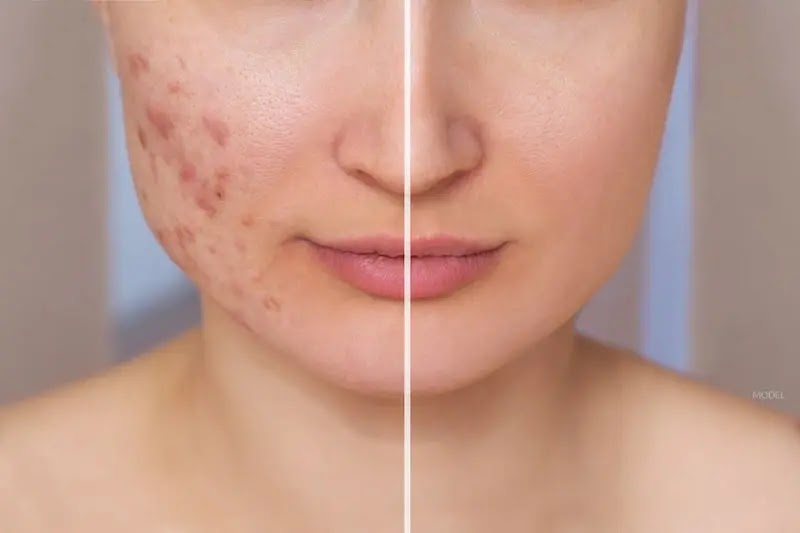
Acne scars are one of the most persistent aftermaths of a common skin condition, and they raise a fair question: can acne scars be removed completely, or is gradual improvement the realistic goal? The good news is that dermatology has come a long way — there’s now a wide range of options, from in-clinic procedures to consistent at-home skincare, that can meaningfully improve their appearance. This guide walks through the most effective treatments so you can have an informed conversation with a dermatologist about what’s right for you. If you’re still dealing with active breakouts, our guide to understanding acne causes and remedies is worth reading first.
As an Amazon Associate, I earn from qualifying purchases. This post contains affiliate links marked (paid link).
Understanding Acne Scars
Before exploring treatments, it helps to understand what you’re dealing with. Acne scars generally fall into two categories: atrophic (depressed) scars, which sit below the surrounding skin, and hypertrophic (raised) scars, which sit above it. The type of scar you have determines which treatments will actually work — a treatment great for depressed scars won’t do much for raised ones, and vice versa. This is exactly why a dermatologist consultation matters before committing to any single approach.
How Long Does Acne Scar Treatment Take to Work?
This varies a lot by method. In-office procedures like laser therapy or fillers can show visible change within days to weeks, though full results from a laser course often take 3-6 months across multiple sessions. At-home topical treatments (retinoids, vitamin C) are the slowest but most sustainable — expect 8-12 weeks of consistent use before seeing real change, since they work by encouraging gradual skin cell turnover and collagen production.
Professional Treatment Options
Laser Therapy
Laser treatment targets specific skin layers to promote collagen production and encourage new, healthy skin cell growth. Fractional laser therapy is particularly effective for resurfacing the skin and reducing scar depth, while ablative and non-ablative options can improve texture, minimize discoloration, and restore a smoother complexion overall.
Chemical Peels
A chemical solution is applied to the skin, causing controlled exfoliation and peeling. This enhances skin texture over several sessions and is one of the more accessible in-clinic options for reducing the appearance of acne scars.
Fillers
Injectable fillers — hyaluronic acid or collagen-based — fill in depressed scars directly, providing an immediately smoother skin surface. A qualified dermatologist will assess your skin type and scar depth to choose the right filler and get the most natural-looking result.
Collagen Induction Therapy (Microneedling)
Fine needles create controlled micro-injuries in the skin, which stimulates the body’s own collagen production and gradually improves scar texture over a series of sessions.
Dermabrasion
A rotating instrument removes the outer layers of skin, which is particularly effective for reducing the appearance of more superficial acne scars.
Corticosteroid Injections
For raised or hypertrophic scars specifically, corticosteroid or other medication injections reduce inflammation and flatten the scar’s appearance over time.
Punch Techniques, Subcision, and Surgery
For deeper or more stubborn scars, surgical approaches come into play: punch techniques (excision, elevation, or grafting) physically remove individual scars; subcision breaks up the fibrous bands beneath depressed scars to let skin smooth out; and full surgical excision is reserved for the most severe cases.
At-Home Treatments You Can Start Today
Not every approach requires a clinic visit. Consistent use of the right topical ingredients can meaningfully fade acne scars over time — this is the slower but most accessible route, and layers well alongside any professional treatment you choose.
- Retinoids/Retinol: Encourage skin cell turnover and boost collagen production, gradually fading discoloration and softening scar texture. Buy Retinol Moisturiser (Paid Link)
- Vitamin C Serum: Brightens post-acne discoloration and supports collagen synthesis alongside retinol. Buy vitamin C serum (Paid Link)
- Silicone Scar Gel: Particularly effective on raised, hypertrophic scars — helps flatten and soften them with daily use. Buy Silicone Scar Gel (Paid Link)
These pair well with any professional treatment above rather than replacing it — think of at-home care as maintenance between clinic visits, or a starting point while you decide on next steps.
Choosing the Right Treatment for Your Scar Type
As a general rule: depressed (atrophic) scars respond best to fillers, microneedling, laser therapy, or subcision. Raised (hypertrophic) scars respond better to corticosteroid injections, dermabrasion, or laser resurfacing. If you’re unsure which category your scars fall into, that’s exactly the first question to bring to a dermatologist consultation — it changes the entire treatment plan.
Frequently Asked Questions
Can acne scars be removed 100%?
Complete removal isn’t always realistic, especially for deeper atrophic scars, but most people see significant, visible improvement with the right combination of treatments and consistent follow-through.
What’s the most affordable acne scar treatment?
At-home topical treatments (retinoids, vitamin C, silicone gel) are the most budget-friendly starting point, though they work more slowly than in-clinic procedures.
Is it safe to combine multiple acne scar treatments?
Often yes — many dermatologists combine approaches (e.g., microneedling plus topical retinoids) for better results, but always confirm timing and compatibility with a professional first, since some combinations can irritate skin if done too close together.
Do acne scar treatments hurt?
Discomfort varies by procedure. Topical treatments have no pain involved. In-clinic options like microneedling or laser therapy may involve mild to moderate discomfort, usually managed with topical numbing cream during the procedure.
How soon after acne clears should scar treatment start?
It’s best to wait until active breakouts have fully resolved and any post-inflammatory redness has settled, typically a few weeks, before starting more intensive scar treatments — this reduces the risk of further irritation.
The Bottom Line
Effective acne scar treatment comes down to matching the right method to your specific scar type and being realistic about timelines — professional procedures work faster but cost more, while at-home consistency is slower but sustainable. Consulting with a dermatologist is crucial to craft a personalized plan, and achieving smoother, radiant skin is well within reach.
References
- Alam, M., et al. (2018). “Efficacy of Fractional Laser Therapy on Acne Scar Revision: A Systematic Review.” JAMA Dermatology. doi:10.1001/jamadermatol.2018.0907.
- Kessler, E., et al. (2008). “Comparison of α- and β-hydroxy acid chemical peels in the treatment of mild to moderately severe facial acne vulgaris.” Dermatologic Surgery, 34(1), 45-51.
- Goodman, G. J., et al. (2015). “The Use of Dermal Fillers in the Face: Considerations for Aesthetic and Tissue Augmentation.” The Journal of Clinical and Aesthetic Dermatology, 8(6), 44–55.
- Fabbrocini, G., et al. (2014). “Acne Scars: Pathogenesis, Classification and Treatment.” Dermatology Research and Practice. doi:10.1155/2014/967981.
- Alam, M., et al. (2016). “Dermabrasion: Therapeutic indications, treatment, and complications.” Journal of the American Academy of Dermatology, 74(6), 1055-1070.
- Cho, S. B., et al. (2017). “Treatment of Hypertrophic Scars and Keloids with a Radiofrequency Device: A Study of Consensus and Controversy.” Plastic and Reconstructive Surgery, 140(5), 1091–1100.
- Jacob, C. I., et al. (2001). “Evaluation of Incisional Dermabrasion for Acne Scars.” Dermatologic Surgery, 27(5), 457-461.
- Sadick, N. S. (2011). “Subcision for Acne Scarring: Technique and Outcomes in 40 Patients.” Dermatologic Surgery, 37(5), 668-678.
- Lee, K., et al. (2019). “Surgical interventions for post-acne scarring: A systematic review.” Journal of Plastic, Reconstructive & Aesthetic Surgery, 72(10), 1609-1618.
- Thiboutot, D., et al. (2009). “Adapalene-benzoyl peroxide, a Fixed-Dose Combination for the Treatment of Acne Vulgaris: Results of a Multicenter, Randomized Double-Blind, Controlled Study.” Journal of the American Academy of Dermatology, 61(3), 434-441.
- Kassir, R. (2015). “New Filling Technique for Atrophic Acne Scars by Using Calcium Hydroxylapatite.” The Journal of Clinical and Aesthetic Dermatology, 8(7), 35–40.




Leave a Reply