
Introduction
Showering is a daily routine, but its impact on your hair’s health is often underestimated. In this comprehensive guide, we will delve into the importance of showering correctly to ensure your hair remains healthy, vibrant, and free from damage. Let’s elevate your shower game and keep your hair looking its best.
As an Amazon Associate, I earn from qualifying purchases. This post contains affiliate links marked (paid link).
The Significance of Proper Showering for Hair Health
Before we dive into the specifics, let’s understand why showering correctly is vital for maintaining healthy hair:
1. Cleansing and Hydration: Proper showering ensures your scalp and hair are free from dirt, oil, and product buildup. It also helps distribute moisture evenly, preventing dryness.
2. Scalp Stimulation: Massaging your scalp during a shower improves blood circulation, which can promote hair growth and a healthy scalp.
3. Damage Prevention: Incorrect showering techniques can lead to hair breakage, split ends, and other forms of damage. By showering the right way, you can minimize these risks.
4. Product Efficiency: Using hair care products correctly in the shower can maximize their effectiveness, helping you achieve your hair goals.
Now that we understand why it’s crucial let’s explore how to take a shower the right way for healthy hair.
The Correct Way to Shower for Healthy Hair
Step 1: Mind the Water Temperature
Water temperature matters. While hot showers may feel relaxing, they can strip your hair of its natural oils, leading to dryness and potential damage. Opt for lukewarm water; it balances effective cleansing and hair hydration.
Step 2: Thoroughly Wet Your Hair
Before applying shampoo or conditioner, ensure your hair is thoroughly wet. This helps the products distribute evenly and prevents them from being diluted by excess water.
Step 3: Shampoo Application
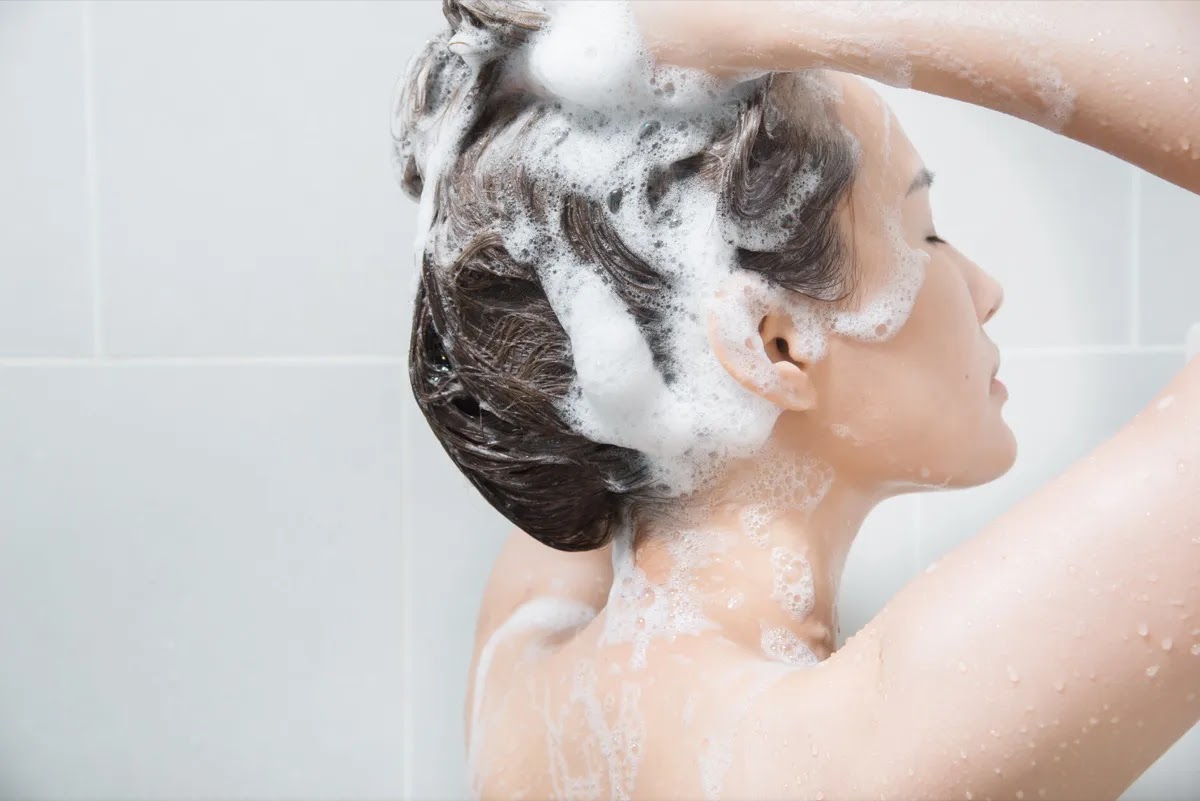
Select a sulfate-free shampoo that suits your hair type. Gently massage the shampoo into your scalp using your fingertips (avoid your nails). Focus on the scalp, where most dirt and oil accumulate. Avoid piling your hair on top of your head; let it fall naturally. Shop my go-to sulfate-free shampoo (paid link).
Step 4: Rinse and Repeat (if necessary)
Rinse your hair thoroughly to remove all shampoo residue. If your hair is very oily or you use many styling products, you can repeat the shampooing process. However, avoid overdoing it, as excessive washing can strip your hair of essential oils.
Step 5: Conditioning
Apply conditioner from mid-length to ends, avoiding the scalp to prevent greasiness. Leave it in for the recommended time (usually a minute or two), then rinse it out completely. You can use a wide-toothed comb to detangle your hair while the conditioner is in to prevent breakage.
Step 6: Final Rinse
End your shower with a final rinse of lukewarm water to seal the hair cuticle and lock in moisture.
Additional Tips for Healthy Hair in the Shower
- Use a Shower Filter: If your tap water is hard or contains chlorine, consider using a shower filter to reduce its harsh effects on your hair, since both minerals and chlorine can build up over time and leave hair dull and brittle. Shop a shower filter (paid link).
- Limit Shower Time: Long, hot showers can dehydrate your hair. Try to keep your shower sessions short and efficient.
- Pat Dry, Don’t Rub: After your shower, avoid vigorously rubbing your hair with a towel. Instead, gently pat it dry to prevent damage.
Common Shower Hair Mistakes to Avoid
- Washing hair every single day: This strips away the natural oils your scalp needs, ironically triggering more oil production to compensate. Most hair types do better with 2-3 washes a week.
- Brushing hair while soaking wet: Hair is at its most fragile and stretchy when wet, brushing at this stage is one of the leading causes of breakage. Use a wide-tooth comb and detangle gently, starting from the ends.
- Piling hair on top of your head to shampoo: This causes tangling and friction. Let hair hang naturally and work the shampoo through with your fingertips instead.
- Skipping the cold final rinse: Ending on hot water leaves the hair cuticle open, which means less shine and more frizz once your hair dries.
- Using way too much shampoo: A coin-sized amount is usually enough. Overloading on shampoo just means more product buildup to rinse out, without any extra cleansing benefit.
Frequently Asked Questions
How often should I wash my hair for optimal health?
Most hair types do best with 2-3 washes a week. Very oily scalps may need more frequent washing, while dry or curly hair often does better with even less.
Is cold water really better for hair than hot water?
For the final rinse, yes, cold water helps seal the hair cuticle, boosting shine and reducing frizz. The rest of your shower is fine at a comfortable lukewarm temperature.
Does hard water actually damage hair?
Yes, over time hard water mineral buildup can leave hair feeling dry, dull, and harder to manage. A shower filter is a simple, low-effort fix if you live somewhere with hard water.
Should I apply conditioner to my scalp too?
Generally no, apply conditioner from mid-length to ends only. Scalp application can leave roots looking greasy and weighed down, especially for those with oily scalps.
Why does my hair still feel tangled after conditioning?
You may not be leaving the conditioner on long enough, or not using enough product on the ends specifically, where hair tends to be driest and most prone to tangling. Try a wide-tooth comb while the conditioner is still in to work through knots gently.
Conclusion
Showering may seem straightforward, but when done correctly, it can significantly contribute to the health and vitality of your hair. By following the right steps, using suitable products, and paying attention to water temperature, you can maintain healthy, luscious locks that shine with vitality. Elevate your shower routine, and watch your hair thrive.



Leave a Reply