
You’ve probably seen the phrase “capsule wardrobe” floating around Pinterest — usually next to a photo of 30 perfectly folded neutral pieces and someone claiming they “never think about what to wear anymore.” It sounds nice. It also sounds like something that requires throwing out half your closet and rebuying it in beige.
It doesn’t. A capsule wardrobe is a system, not a purge — and once you understand how it actually works, you can build one with clothes you already own.

What Is a Capsule Wardrobe, Exactly?
A capsule wardrobe is a small, intentional collection of clothing where every piece is chosen to work with several others — so instead of a closet full of one-outfit items, you have a smaller set of pieces that combine into dozens of different looks. The term dates back to 1970s London, when boutique owner Susie Faux used it to describe a handful of “essential” items — skirts, trousers, coats — that didn’t go out of style, topped up seasonally with a few trend pieces.
The modern version works the same way, just with a wardrobe planning twist that fits real life rather than a boutique owner’s curated rack. It’s not about a magic number of items. It’s about coordination: every top should pair with more than one bottom, every neutral should earn its place by matching multiple other pieces, and nothing should be a one-outfit wonder sitting unworn in the back of your closet.
Capsule Wardrobe vs. Just “Owning Less”
This is where most people get it wrong, and it’s the single biggest reason capsule wardrobes fail before they even start. A capsule wardrobe isn’t minimalism for its own sake — it’s about maximizing outfits per piece, not minimizing pieces for the sake of a number. Two people can each own 35 items and have completely different results: one because every piece shares a coordinated color combination that lets them mix and match freely, the other because they just packed a bag for a trip. The difference is the system behind the pieces, not the count.
The Real Benefits (Beyond a Tidy Closet)
- Less decision fatigue. When every piece in your closet already works with several others, “what do I wear” stops being a 10-minute negotiation every morning.
- You stop buying duplicates. Once you can see your wardrobe as a system, it’s obvious when you’re about to buy your fourth almost-identical black top instead of something that actually fills a gap.
- Packing and travel get easier. A wardrobe built to coordinate is, by definition, easier to pack — the same handful of pieces mix into a week’s worth of outfits without needing a separate suitcase logic every trip.
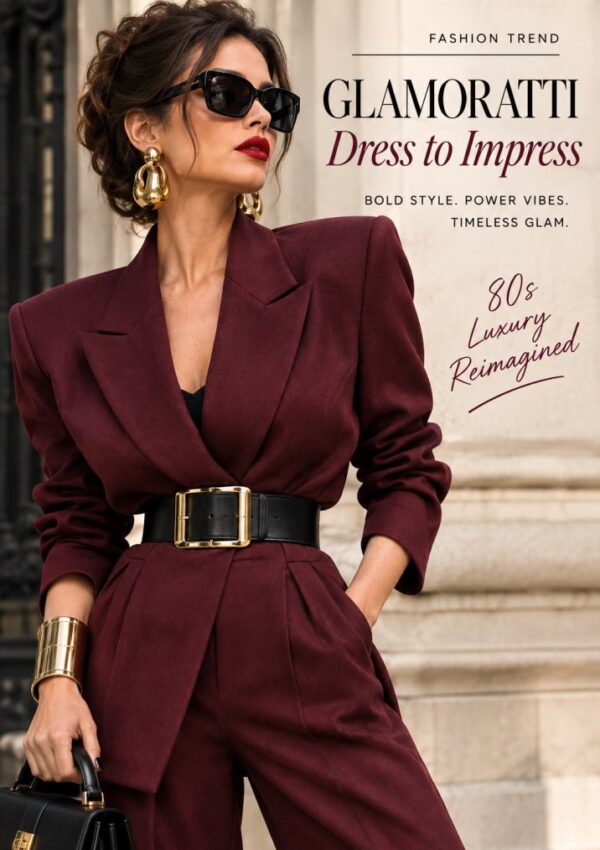
- You’re never stuck for an outfit. Whether it’s a casual day or you need to dress to impress for something specific, a coordinated closet means you’re pulling from pieces that already play well together — not hoping two random items happen to match.

The Capsule Wardrobe Planner
Turn This Into a Wardrobe You Actually Wear
A 14-page planner with fill-in worksheets — the exact color formula and closet audit above, but with space to actually work through it.
Get The Planner — $12 →How Many Pieces Do You Actually Need?
This is the most-asked question, and the honest answer is: it depends on your climate, your work life, and how often you do laundry — not a fixed rule. Most starting benchmarks land somewhere between 30–40 pieces across tops, bottoms, dresses, outerwear, shoes, and bags, but that’s a starting point to adjust, not a law to follow. A quiet-luxury, old money-inspired capsule, for example, might lean on fewer, higher-quality pieces in a tighter color range — while someone who dresses more casually day to day might want a slightly wider base.
The 3-2-1 Color Formula (The Fastest Way to Make Everything Match)
If there’s one single trick that makes a capsule wardrobe actually function, it’s this: build your palette around 3 neutrals, 2 accent colors, and 1 metallic or wildcard. Neutrals (think beige, black, navy, cream) are your foundation — they should be able to pair with almost anything else in the closet. Accents add personality without breaking coordination. The wildcard is your one “fun” color or print that you layer in sparingly. You can see this in action in a single-category example, like building outfits around beige trousers — one neutral bottom, five different top colors, five completely different looks.
How to Start Building Yours This Weekend
You don’t need a shopping trip to start — you need an afternoon with your closet, a notebook, and this order of operations:
- Audit what you own. Sort everything into three piles: Keep & Love, Maybe, and Let Go. Be honest about the “Maybe” pile — if you haven’t worn it in a year, it’s probably a Let Go.
- Notice your style pattern. Look at the outfits you actually reach for and love wearing. There’s usually a common thread — classic, relaxed, romantic, or bold — that should guide what you keep building around.
- Apply the color formula. Sort your Keep & Love pile by the 3-2-1 formula above and see where the gaps are.
- Count and categorize. Break your final list into tops, bottoms, dresses, outerwear, shoes, and accessories so you can see your wardrobe as a system, not a pile.
- Test the combinations. Before buying anything new, physically try pairing pieces you already own. You’ll usually find more outfits hiding in your closet than you expected.
Common Capsule Wardrobe Mistakes to Avoid
Most capsule wardrobes fail for the same handful of reasons, and they’re worth knowing before you start:
- Buying a whole new wardrobe at once. The fastest way to end up with a capsule that doesn’t feel like you is to buy 30 items in one weekend based on a Pinterest photo. Build from what you already own first, then fill genuine gaps slowly.
- Choosing colors you don’t actually like wearing. Beige is the “default” capsule neutral online, but if you never reach for beige, your capsule will sit unworn no matter how well it coordinates on paper. The 3-2-1 formula works with any neutrals — pick the ones you gravitate toward.
- Skipping the outfit-testing step. It’s tempting to stop at the shopping list. But a capsule only proves itself once you’ve actually laid out (or worn) real outfit combinations — that’s what turns a coordinated closet into a wardrobe you reach for.
- Treating the piece count as a pass/fail test. If your capsule ends up at 28 pieces or 45, that’s not a failure — the number is a planning tool, not a grade.
The Capsule Wardrobe Planner
Turn This Into a Wardrobe You Actually Wear
A 14-page planner with fill-in worksheets — the exact color formula and closet audit above, but with space to actually work through it.
Get The Planner — $12 →Frequently Asked Questions
Is a capsule wardrobe the same as minimalism?
Not quite. Minimalism is about owning less in general; a capsule wardrobe is specifically about owning pieces that coordinate with each other. You could technically have a large capsule wardrobe, as long as everything in it works together.
How many pieces should be in a capsule wardrobe?
There’s no fixed number — most people start somewhere around 30–40 pieces and adjust from there based on climate, lifestyle, and how often they do laundry. Treat any number you see online as a starting benchmark, not a rule.
Do I need to buy new clothes to start a capsule wardrobe?
No — and ideally you shouldn’t, at least not at first. Start by auditing and sorting what you already own. Most people can build a working capsule list almost entirely from their existing closet before adding anything new.
Can a capsule wardrobe work if I live somewhere with four distinct seasons?
Yes — the trick is building a core capsule of pieces that work across seasons (neutrals, layering basics) and adding a smaller seasonal “extension” of 5–8 pieces as the weather changes, rather than replacing the whole wardrobe each season.
How often should I redo my capsule wardrobe?
Most people revisit theirs once per season — not because everything needs to change, but because it’s a good checkpoint to remove what didn’t get worn, and adjust for genuinely new needs (a new job, a move, a shift in lifestyle).
Ready to Actually Build Yours?
Reading about capsule wardrobes is the easy part — the real value comes from actually sorting your closet, applying the color formula, and writing down outfit combinations you can commit to. That’s the exact process the Capsule Wardrobe Planner walks you through, step by step, with fill-in worksheets so you’re not just reading advice but actually doing the work — from the closet audit and style check all the way through to a written list of 20+ outfits you can actually wear.
Pin this guide for your next closet clean-out — future you will thank you.
The Capsule Wardrobe Planner
Turn This Into a Wardrobe You Actually Wear
A 14-page planner with fill-in worksheets — the exact color formula and closet audit above, but with space to actually work through it.
Get The Planner — $12 →



Leave a Reply